
 Caroline Sarah
Parasomnia, a fascinating yet perplexing realm of sleep disorders, captivates the attention of both researchers and those affected. These unusual behaviors during sleep can range from sleepwalking to night terrors, significantly impacting the quality of life for individuals and their families. Understanding parasomnia involves delving into its various types, physiological mechanisms, and the far-reaching effects it can have on mental health and daily routines.
By exploring the different forms of parasomnia, the underlying brain functions, and the treatment options available, we can gain valuable insights into this complex phenomenon. The journey through parasomnia not only uncovers its mysteries but also highlights the importance of awareness and education in managing its implications.
Understanding Parasomnia and Its Types
Parasomnia refers to a category of sleep disorders characterized by abnormal movements, behaviors, emotions, perceptions, or dreams that occur while falling asleep, sleeping, or waking up. This condition is significant because it can disrupt the sleep cycle, affecting overall health and daily functioning. Individuals suffering from parasomnia may experience issues that lead to anxiety, fatigue, and impaired concentration during the day, highlighting the importance of understanding its various forms.
Parasomnia is broadly classified into several types, which each present unique characteristics and symptoms. Understanding these types can help in identifying the condition and seeking appropriate treatment. Below are four distinct types of parasomnia, each affecting individuals differently and impacting their sleep quality.
Types of Parasomnia
The following are key types of parasomnia that illustrate the diverse nature of this sleep disorder:
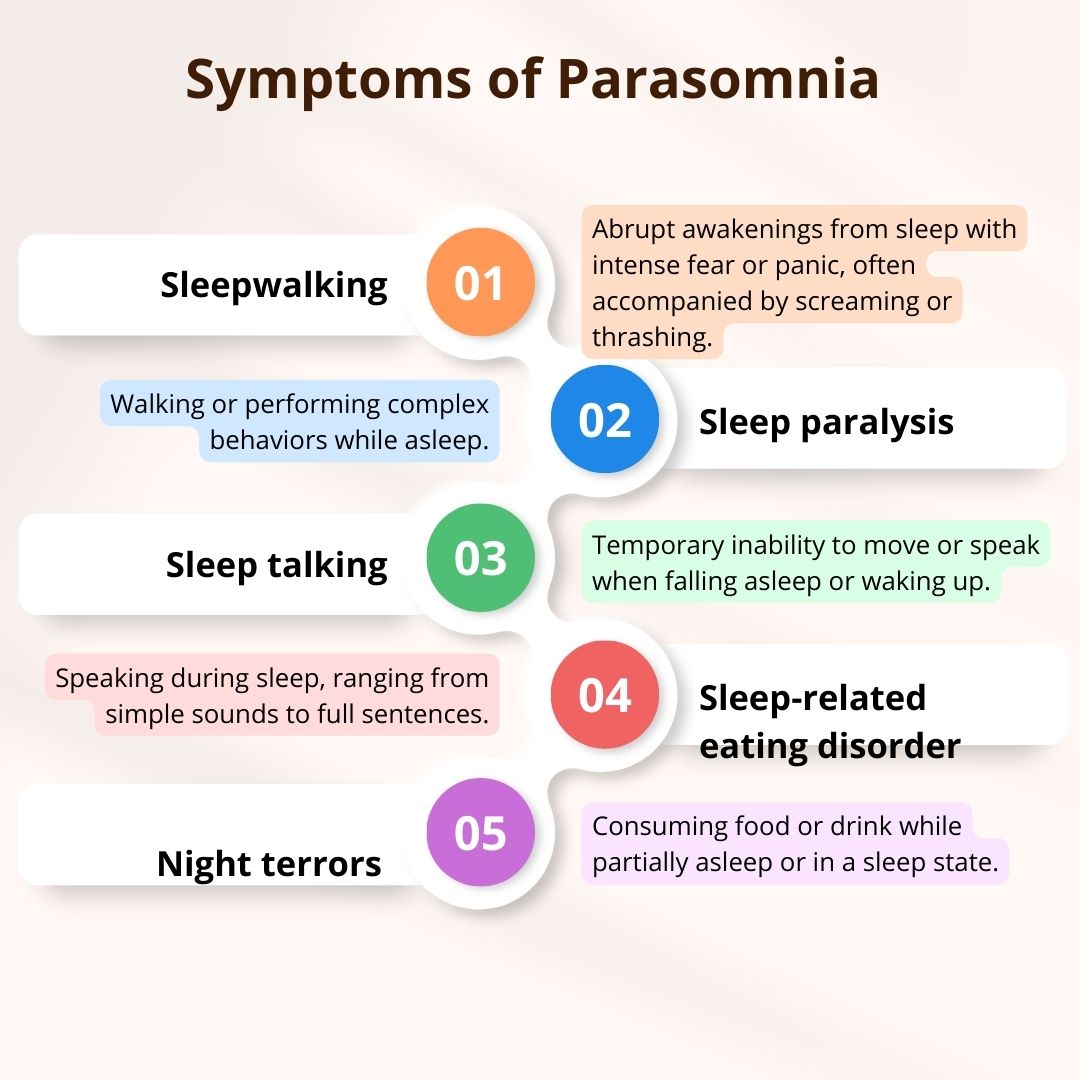
- Sleepwalking: A behavior disorder that involves walking or performing other complex behaviors while asleep. An individual may get out of bed and walk around without any memory of the event upon waking. Sleepwalking can lead to accidents or injuries, both to the individual and possibly to others nearby. For instance, a sleepwalker might stumble down stairs or leave the house in the middle of the night, resulting in significant danger.
- Night Terrors: This disorder typically affects children but can also occur in adults. Night terrors involve sudden awakenings from sleep accompanied by intense fear or panic, often resulting in screaming or thrashing. Individuals experiencing night terrors may not recall the episode the next day, leading to confusion and distress among family members trying to comfort them, thus disrupting the entire household’s sleep quality.
- Sleep Talking: Known as somniloquy, sleep talking involves speaking during sleep without awareness. The content can range from nonsensical phrases to coherent dialogue. While usually harmless, frequent sleep talking can be disruptive to a partner’s sleep and may indicate underlying sleep issues, affecting the overall sleep environment and causing tension between partners.
- REM Sleep Behavior Disorder: This disorder is characterized by the acting out of dreams during the REM phase of sleep, which can involve physical movements such as kicking, punching, or jumping out of bed. This behavior can lead to injuries, both for the individual and their bed partner. For example, someone experiencing this disorder may inadvertently harm their partner during a vivid dream, leading to both fear and anxiety about sleep.
Each of these types of parasomnia has distinct impacts on sleep quality and daily life, highlighting the need for awareness and appropriate management strategies.
The Physiological Mechanisms Behind Parasomnia
Parasomnia encompasses a range of sleep disturbances that occur during the different stages of sleep, particularly during transitions between wakefulness and sleep. These episodes can manifest in various forms, such as sleepwalking, night terrors, or REM sleep behavior disorder. Understanding the physiological mechanisms underlying parasomnia requires a closer look at brain functions, sleep stages, and the neural pathways involved in these occurrences.
The human sleep cycle consists of several stages, including non-REM and REM sleep, each playing a crucial role in maintaining overall health. Parasomnias typically occur during transitions between these stages. For instance, sleepwalking often takes place during deep non-REM sleep, while REM sleep behavior disorder occurs during REM sleep when the body is normally paralyzed. The interplay between these stages and brain functions is critical in understanding parasomnia.
Brain Functions and Sleep Stages Involved in Parasomnia
The brain’s activity during sleep is regulated by various structures that coordinate the sleep-wake cycle. The hypothalamus, for instance, plays a key role in maintaining the circadian rhythm, while the brainstem is essential for regulating REM sleep.
- Hypothalamus: This region of the brain manages sleep regulation, influencing sleep stages by controlling the release of hormones like melatonin, which promote sleep.
- Brainstem: Involved in the control of REM sleep, the brainstem inhibits the motor neurons that typically keep the body immobile during this stage.
- Cerebral Cortex: This area processes sensory information and is involved in higher cognitive functions, which can sometimes become active during parasomnia, leading to complex behaviors.
“The interaction between different brain regions during sleep is vital for understanding the phenomena of parasomnia.”
Neurological Pathways Triggering Parasomnia Episodes
Certain neurological pathways are believed to be critical in triggering parasomnia episodes. These pathways involve the coordination of neurotransmitters and hormones, which influence sleep architecture and behavioral responses during sleep.
- Ascending Reticular Activating System (ARAS): This pathway regulates wakefulness and sleep transitions, and disturbances in its function can lead to episodes of parasomnia.
- Thalamocortical Circuits: The connections between the thalamus and the cortex play a significant role in sensory processing during sleep, which can lead to the manifestation of parasomnias when disrupted.
Role of Neurotransmitters and Hormones in Parasomnia
The manifestation of parasomnia is heavily influenced by neurotransmitters and hormones that regulate various sleep stages and processes. Some key players include:
- Gamma-Aminobutyric Acid (GABA): This neurotransmitter is crucial for promoting relaxation and inhibiting excessive neuronal activity, which can help regulate the transitions between sleep states.
- Dopamine: Elevated dopamine levels during specific sleep stages can lead to increased motor activity, which is often observed in conditions such as REM sleep behavior disorder.
- Cortisol: As a stress hormone, imbalances in cortisol levels can affect sleep quality and are often linked to increased occurrences of parasomnia.
“Neurotransmitters and hormones work together to maintain the delicate balance necessary for healthy sleep and can lead to disruptions resulting in parasomnia.”
The Impact of Parasomnia on Mental Health
Parasomnia encompasses a range of sleep disorders, including sleepwalking, night terrors, and REM sleep behavior disorder. These conditions can significantly influence an individual’s mental health, leading to increased symptoms of anxiety and depression. The disruption of sleep patterns and the distress caused by parasomnia can create a vicious cycle that exacerbates existing mental health issues.
The relationship between parasomnia and mental health is complex. Individuals who experience parasomnia often report feelings of anxiety, stress, and even depression. This connection stems from several factors, including sleep deprivation, fear of episodes, and the impact on daily functioning. Poor sleep quality can lead to cognitive difficulties, irritability, and emotional instability, which can further contribute to mental health disorders. Research has shown that individuals with parasomnia are at a higher risk of developing anxiety disorders and depressive symptoms, creating a challenging cycle that can be difficult to break.
Psychological Effects of Living with Parasomnia
Living with parasomnia can have profound psychological effects on individuals. Many report experiencing a heightened sense of anxiety surrounding bedtime and sleep. This apprehension can lead to insomnia, further complicating mental health. Personal testimonials reveal the emotional toll that parasomnia can take. For instance, one individual shared their experience of waking up in a panic after a night terror, feeling disoriented and fearful, which lasted long after the episode. Another case study highlighted a college student who struggled with sleepwalking episodes, leading to increased anxiety about sleeping in unfamiliar places, ultimately impacting their social life and academic performance.
The psychological impact of parasomnia often necessitates strategies to mitigate its effects. Here are several approaches that can help individuals manage their mental health in relation to parasomnia:
- Cognitive Behavioral Therapy (CBT): This approach can help individuals develop coping mechanisms and address anxiety related to sleep disturbances.
- Sleep Hygiene Practices: Establishing a consistent sleep schedule, creating a relaxing bedtime routine, and optimizing the sleep environment can enhance sleep quality and reduce anxiety.
- Mindfulness and Relaxation Techniques: Practices such as meditation and deep-breathing exercises can help alleviate the stress and anxiety associated with anticipating parasomnia episodes.
- Medication: In some cases, healthcare providers may recommend medications to help manage symptoms of anxiety or depression that coexist with parasomnia.
- Support Groups: Connecting with others who experience similar challenges can provide emotional support and practical tips for managing parasomnia effects.
“Understanding and addressing the mental health impact of parasomnia is crucial for improving overall well-being and quality of life.”
Treatment Options for Parasomnia
Parasomnia encompasses a range of sleep disorders characterized by abnormal behavior or experiences during sleep. Effective management of parasomnia typically requires a combination of behavioral and pharmacological approaches. Understanding the available treatment options is crucial for those affected by these disruptive sleep disorders.
Various methodologies exist to alleviate the symptoms of parasomnia. Treatment can be tailored based on the specific type of parasomnia, its severity, and individual patient needs. The following sections delve into the key treatment strategies, illustrating both behavioral and pharmacological approaches alongside lifestyle modifications.
Behavioral and Pharmacological Treatment Approaches
The treatment of parasomnia often begins with non-pharmacological strategies that involve behavioral interventions. Cognitive Behavioral Therapy (CBT) is particularly effective, as it helps individuals address the thoughts and behaviors that contribute to sleep disturbances. Key components of CBT for parasomnia include:
- Sleep restriction: Limiting the time spent in bed to improve sleep efficiency.
- Stimulus control: Associating the bed with sleep rather than wakefulness.
- Relaxation techniques: Employing mindfulness or deep-breathing exercises to reduce anxiety before bedtime.
When behavioral approaches are insufficient, pharmacological treatments may be recommended. Medications like clonazepam or certain antidepressants can help mitigate episodes. While these medications can be effective, they often carry risks of side effects and dependency, necessitating careful monitoring by healthcare professionals.
Comparison of Cognitive Behavioral Therapy and Medication
Cognitive Behavioral Therapy (CBT) often stands as a first-line treatment for many sleep disorders, including parasomnia, due to its non-invasive nature and long-term benefits. CBT addresses underlying cognitive patterns that may fuel sleep disturbances, while also offering strategies that help recondition sleep habits.
In comparison, medication can provide quicker relief from symptoms but may not address the root cause of the disorder. Research indicates that:
CBT typically shows sustained improvement in sleep quality long after treatment has concluded, whereas pharmacological interventions may require ongoing use to maintain effects.
This highlights the importance of considering the long-term implications of treatment options, with many experts advocating for a combined approach that utilizes both CBT and medication when necessary.
Lifestyle Changes and Sleep Hygiene Practices
In addition to formal treatment methods, implementing lifestyle changes and practicing good sleep hygiene can significantly reduce the frequency and severity of parasomnia episodes. Key practices include:
- Establishing a consistent sleep schedule: Going to bed and waking up at the same time daily helps regulate the body’s internal clock.
- Creating a comfortable sleep environment: Ensuring a dark, cool, and quiet bedroom promotes better sleep quality.
- Avoiding stimulants: Reducing intake of caffeine and nicotine, particularly in the hours leading up to bedtime, can enhance sleep onset.
- Limiting screen time: Reducing exposure to screens before bed helps in minimizing blue light interference with melatonin production.
Incorporating these practices can create a supportive environment for improved sleep, thereby reducing the potential for parasomnia episodes. Maintaining good sleep hygiene is a vital aspect of managing sleep disorders and ensuring restorative rest.
The Role of Sleep Studies in Diagnosing Parasomnia
Sleep studies, also known as polysomnography, are essential tools in diagnosing parasomnia, a sleep disorder characterized by abnormal movements, behaviors, and experiences during sleep. These studies provide comprehensive data to help healthcare professionals understand the underlying causes of parasomnia and determine the most effective treatment options. By analyzing various aspects of a patient’s sleep, clinicians can gain insight into the unique patterns and triggers associated with their conditions.
The sleep study process begins with an overnight stay at a sleep center, where patients are monitored in a controlled environment. During this time, a variety of data is collected to assess different sleep stages and identify any irregular behaviors. The significance of sleep studies lies in their ability to capture real-time physiological changes, providing a clear picture of the patient’s sleep architecture and any disturbances that may occur.
Patient Experience During a Sleep Study
Patients undergoing a sleep study can expect a comfortable yet monitored environment. Here’s an overview of the experience and the data collected:
– Preparation: Upon arrival at the sleep center, patients are briefed on the procedure and what to expect. They may be asked to avoid caffeine and certain medications beforehand.
– Electrode Placement: A technician will attach electrodes to the patient’s scalp, face, and body to monitor brain waves, heart rate, breathing patterns, and muscle activity. This may feel slightly uncomfortable but is non-invasive.
– Recording: Patients will sleep in a private room while their sleep is recorded. Video monitoring may also be employed to observe any sleep behaviors visually.
The types of data collected during the study include:
– Electroencephalogram (EEG): Measures brain activity and helps identify different sleep stages.
– Electromyogram (EMG): Monitors muscle activity, particularly in the chin and legs, to detect movements during sleep.
– Electrocardiogram (ECG): Records heart rate and rhythm to assess cardiovascular function during sleep.
– Respiratory Measurements: Monitors airflow and oxygen levels, which can reveal issues like sleep apnea.
– Video Monitoring: Captures any unusual behaviors or movements, providing additional context for the clinical team.
The results of the sleep study are critical in shaping personalized treatment plans for individuals with parasomnia. By analyzing the data, healthcare providers can determine the frequency and type of parasomnia events, as well as any related conditions. This information is invaluable for developing effective management strategies, which may include lifestyle changes, medication, or behavioral therapies tailored to each patient’s needs.
Ultimately, sleep studies serve as a cornerstone in the accurate diagnosis of parasomnia, guiding clinicians in delivering targeted care based on measurable outcomes rather than subjective reports alone.
Myths and Misconceptions about Parasomnia
Parasomnia is often surrounded by a cloud of myths and misconceptions that can mislead individuals about the reality of this sleep disorder. Understanding these myths and clarifying the facts can foster a more accurate perception of parasomnia, leading to better support and treatment for those affected.
Misinformation regarding parasomnia can significantly impact public perception, making it difficult for individuals to seek help or for society to offer understanding. Many people still equate parasomnia with dangerous behaviors, which can cause fear and stigma around those who experience it. Clarifying these misconceptions is essential for promoting awareness and empathy in communities.
Common Myths Surrounding Parasomnia
There are several prevalent myths about parasomnia that require addressing. These misconceptions often stem from misunderstandings about sleep disorders in general.
- Myth: Parasomnia only occurs during childhood. In reality, while many children may experience sleepwalking or night terrors, these conditions can persist into adulthood or even emerge later in life.
- Myth: People with parasomnia are dangerous while asleep. This misconception overlooks the fact that most parasomniacs do not engage in harmful behaviors. While they may exhibit unusual movements, they are typically unaware of their actions and pose little risk to themselves or others.
- Myth: Parasomnia can be cured with medication alone. Treatment often requires a comprehensive approach that includes lifestyle changes, therapy, and, in some cases, medication. A one-size-fits-all solution is rarely effective.
- Myth: All parasomnias are the same. There are various types of parasomnias, including sleepwalking, night terrors, and REM sleep behavior disorder, each with distinct characteristics and causes.
Understanding and dismantling these myths is crucial for reducing stigma and encouraging those affected to seek help.
Education plays a vital role in dispelling myths about parasomnia. Sharing factual information with friends, family, and the broader community can lead to a more supportive environment for those experiencing these sleep disorders. Strategies for effective education include:
- Sharing resources from reputable organizations that specialize in sleep disorders, such as the American Academy of Sleep Medicine.
- Encouraging open discussions about sleep health and related conditions to normalize conversations around parasomnia.
- Utilizing social media platforms to share informative articles, videos, and personal stories that highlight the realities of living with parasomnia.
- Organizing community workshops or webinars to educate others directly about sleep disorders and their impacts.
In conclusion, addressing myths and misconceptions around parasomnia is essential for fostering understanding and support. By actively educating ourselves and others, we can establish a more inclusive dialogue that empowers those affected to seek the help they need.
The Future of Research in Parasomnia
Current trends in parasomnia research indicate a growing interest in understanding the complexities of sleep disorders that disrupt normal sleep patterns. Advances in technology and neuroscience are driving a more profound exploration of conditions like sleepwalking, night terrors, and REM sleep behavior disorder. Researchers are employing innovative methods, including neuroimaging and genetic analysis, which open new avenues for understanding the underlying mechanisms of these phenomena.
As the field of sleep medicine evolves, several potential areas for future studies are emerging that could significantly enhance our understanding and treatment of parasomnia. One promising avenue is the investigation of the genetic components that may predispose individuals to parasomnias, which could lead to targeted therapies and personalized treatment plans. Additionally, the role of environmental factors, such as stress and lifestyle, in triggering parasomnia episodes remains underexplored, presenting a rich area for research.
Innovative Approaches in Treatment
Exploring innovative treatment approaches offers exciting possibilities for those affected by parasomnia. Current research is increasingly focusing on non-pharmacological interventions, which may provide safer and more effective management options. Some notable areas of exploration include:
- Cognitive Behavioral Therapy (CBT): CBT techniques aim to help individuals modify their thoughts and behaviors related to sleep, potentially reducing parasomnia occurrences.
- Sleep Hygiene Education: Promoting healthy sleep practices can play a crucial role in managing symptoms and enhancing overall sleep quality.
- Technological Innovations: Wearable devices and mobile applications are being developed to monitor sleep patterns, providing real-time data that can inform treatment choices.
Ongoing research is vital for a deeper understanding of parasomnia and its treatment. The more researchers delve into the neurological, psychological, and environmental factors influencing these disorders, the better equipped they will be to develop effective interventions. This not only benefits those who suffer from parasomnia but also expands the broader field of sleep medicine, ultimately improving the quality of sleep and health for many individuals.
Advancements in understanding sleep disorders can lead to groundbreaking changes in treatment approaches, significantly impacting patients’ lives.
Wrap-Up

In conclusion, understanding parasomnia is crucial for recognizing its impact on both sleep and mental well-being. Through continued research and awareness, we can address common misconceptions, develop effective treatment strategies, and ultimately improve the lives of those affected. As we look to the future, ongoing exploration in this field promises to enhance our knowledge and treatment of parasomnia, paving the way for better sleep health for everyone.
Essential Questionnaire
What are the main types of parasomnia?
The main types include sleepwalking, night terrors, REM sleep behavior disorder, and sleep eating disorder.
Can parasomnia be hereditary?
Yes, there is evidence suggesting a genetic component to parasomnia, making it more likely to occur in families.
How can I tell if I have parasomnia?
Noticing unusual behaviors during sleep or being informed by a partner can indicate parasomnia. A sleep study may be required for diagnosis.
Are there any lifestyle changes that can help with parasomnia?
Improving sleep hygiene, reducing stress, and avoiding stimulants before bedtime can help manage symptoms.
Is medication always necessary for treating parasomnia?
No, many people find success with behavioral therapies or lifestyle adjustments, while medication may be considered for severe cases.
Can parasomnia affect children differently than adults?
Yes, children may experience different forms of parasomnia, like sleepwalking, and often outgrow them, though their impacts can vary.